
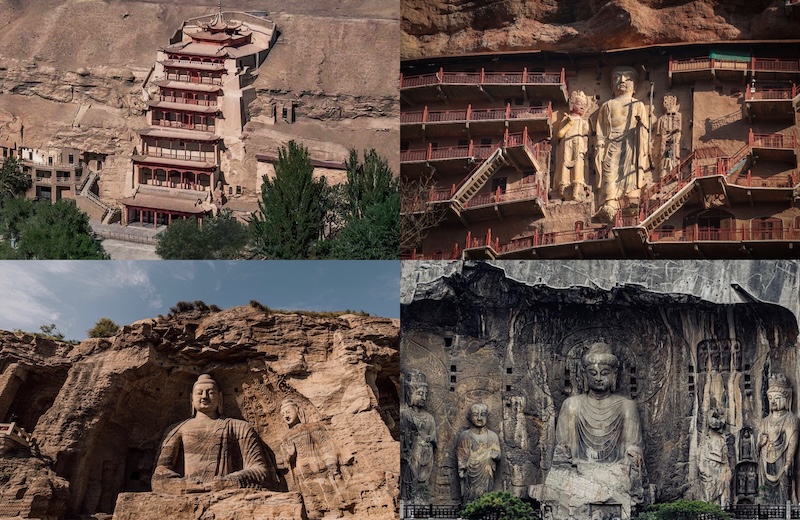
Across the vast expanse of China, there are four places where faith, art, and history are literally fused into the rock. For over a thousand years, artisans, monks, and emperors left their mark on cliffs and mountains, creating some of the world's most extraordinary artistic treasures.
The four most famous Buddhist grottoes in China —the Mogao Grottoes in Dunhuang, Maijishan in Tianshui, Yungang in Datong and Longmen in Luoyang— they represent the pinnacle of Chinese rock art and reflect centuries of cultural exchange throughout the Silk Road.
From the 4th century until the Song Dynasty, thousands of sculptures and murals were carved into these sanctuaries. Today, these complexes are considered veritable open-air museums that offer insight into the evolution of Buddhist art in Asia.
Each of these sites has a unique personality:
- Could It dazzles with its murals and its incomparable artistic richness.
- Maijishan It stands out for its delicate clay sculptures full of emotion.
- Yungang It impresses with gigantic Buddhas of international influence.
- Longmen It conveys imperial majesty and a beauty marked by the passage of time.
Exploring these caves is not just a tourist trip: it is a way to journey through more than a thousand years of spiritual and cultural history.
Quick comparison of the four Buddhist grottoes in China
| Gruta | Location | Start of construction | Number of caves | Entry | Features |
|---|---|---|---|---|---|
| Could | Dunhuang, Gansu | 366 AD | 735 | 238 RMB / 100 RMB | World's most famous murals |
| Maijishan | Tianshui, Gansu | 384 AD | 221 | 80 RMB | More delicate clay sculptures |
| Yungang | Datong, Shanxi | 460 AD | 252 | 120 RMB | Large Buddhas and Gandhara style |
| Longmen | Luoyang, Henan | 493 AD | 2345 | 90 RMB | Tang Imperial Majesty |
Mogao Caves (Dunhuang): The great art gallery of the desert
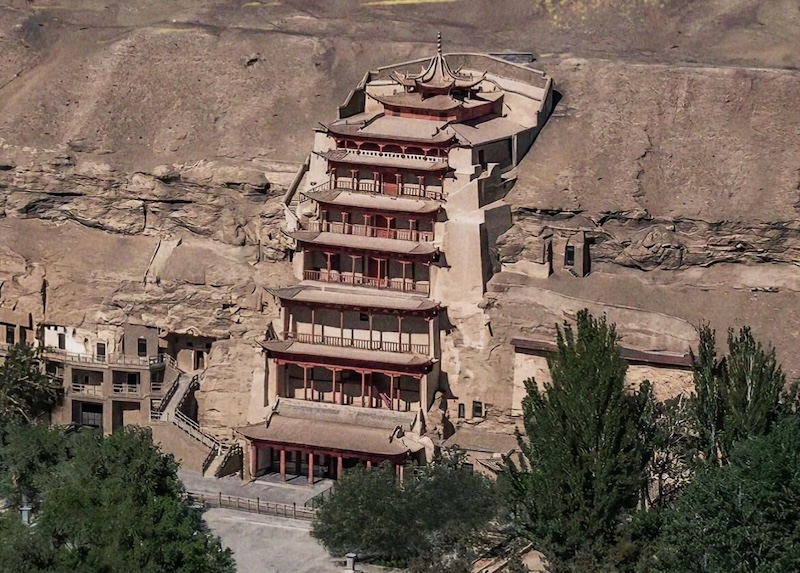
In the heart of the Gobi Desert, about 25 km from Dunhuang, lies one of Asia's most extraordinary cultural treasures: the Mogao Grottoes, also known as the Thousand Buddha Caves.
Its construction began in 366 AD and continued for more than a thousand years, spanning numerous dynasties such as the Northern Wei, Sui, Tang, and Song.
The complex currently retains:
- 735 caves
- 45.000 m² of murals
- more than 2.400 statues
Due to their incalculable value, visits are strictly controlled. Visitors must tour the caves accompanied by official guides, and photography is not permitted. These measures help preserve the delicate pigments that have survived for over a millennium.
What makes the Mogao caves unique is the extraordinary richness of their murals, considered the most important collection of Buddhist mural art in the world.
Some must-see caves include:
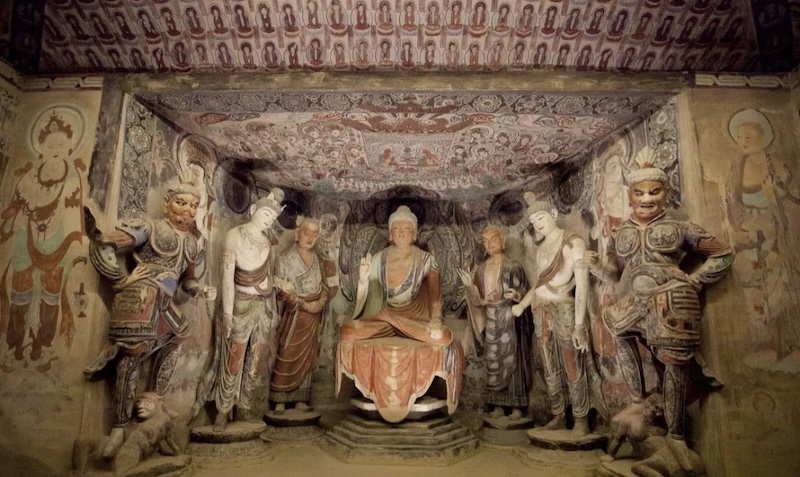
Cave 45 – It is a masterpiece of Tang Dynasty sculptural art
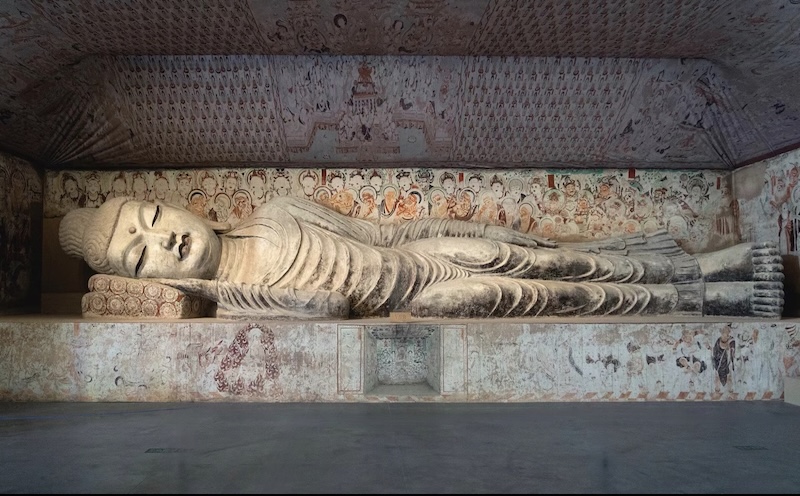
Cave 158 – where the Buddha's Nirvana is depicted
Cave 17 – known as the Dunhuang Library, where more than 50.000 historical manuscripts were discovered
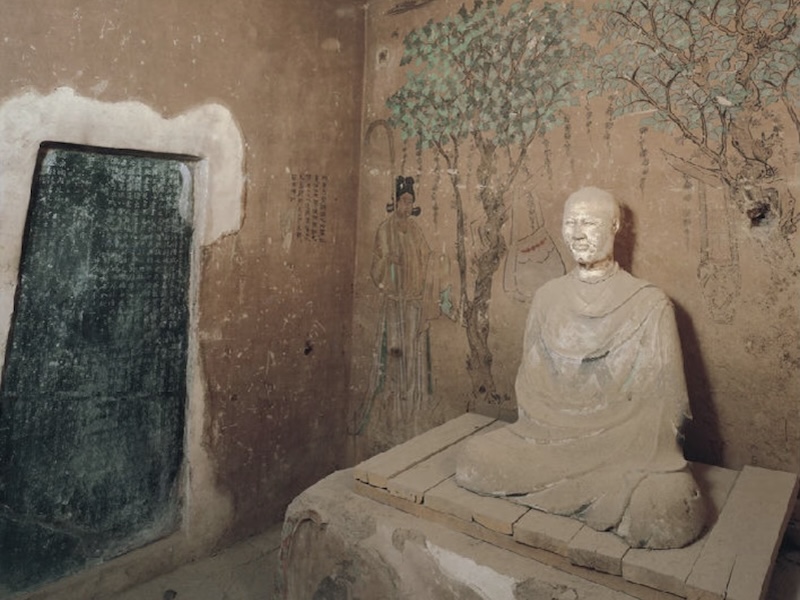
Each mural tells Buddhist stories, scenes from daily life, or tales from the Silk Road, making Mogao a unique visual archive of Asian history.
Tips for visiting the Mogao Caves
Tip 1Photography is prohibited inside the caves; the use of flash can damage the ancient murals, so be sure to follow the rules.
Tip 2There are three main types of Tickets for the Mogao Caves:
- Regular Entry238 RMB in high season, 140 RMB in low season. Includes two digital movies, round-trip bus transportation, and a guided tour of eight caves with a professional guide and headsets. This is the recommended option!
- Emergency Entrance100-120 RMB in high season, 80 RMB in low season. This is an alternative if you can't get a regular ticket during high season: you'll only be able to visit four caves, with round-trip transportation included.
- Special Entrance150-200 RMB per cave. This type of ticket allows you to visit exquisite caves that haven't been extensively restored, with a more professional guided tour. Tickets can only be purchased if you already have a regular or emergency entry ticket.
Maijishan Grottoes (Tianshui): China's most exquisite sculpture sanctuary
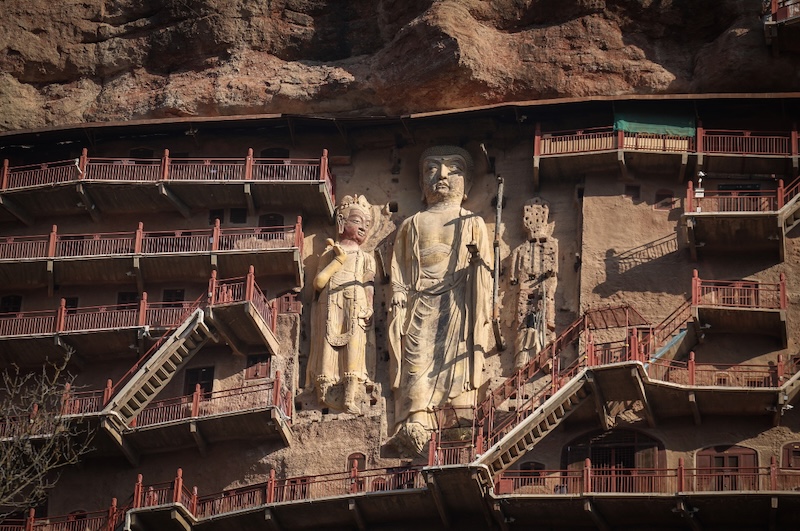
If Mogao represents the grandeur of mural art, Maijishan He is famous for his extraordinary collection of polychrome clay sculptures.
Located 45 km from Tianshui, in Gansu province, this complex was built from the 4th century onwards and was expanded during several dynasties.
Today it preserves:
- 221 caves
- more than 7.200 sculptures
- 1.000 m² of murals
The caves are carved into a cliff shaped like a wheat mountain, from which the name Maijishan originates.
Unlike other Buddhist grottoes, the sculptures here convey an extraordinary humanity and emotional connection. The gentle faces, serene expressions, and familiar scenes create an intimate and moving atmosphere.
Among his most famous works are:
The meeting between Buddha and his son Rahula
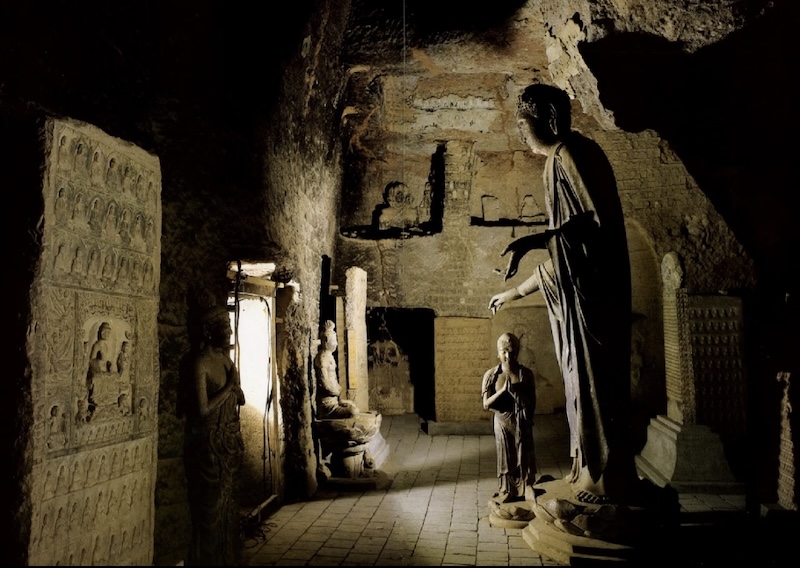
The whispering disciples of the Northern Wei dynasty
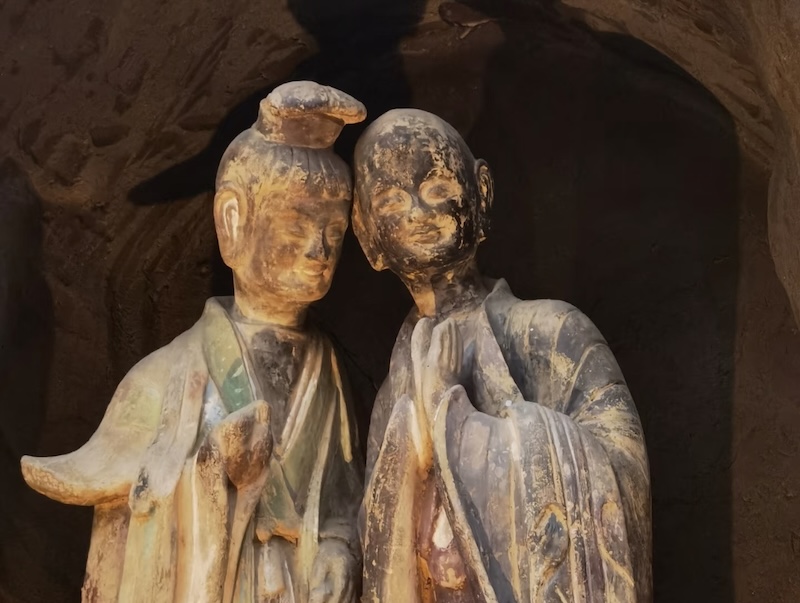
The elegant bodhisattva of the Western Wei dynasty
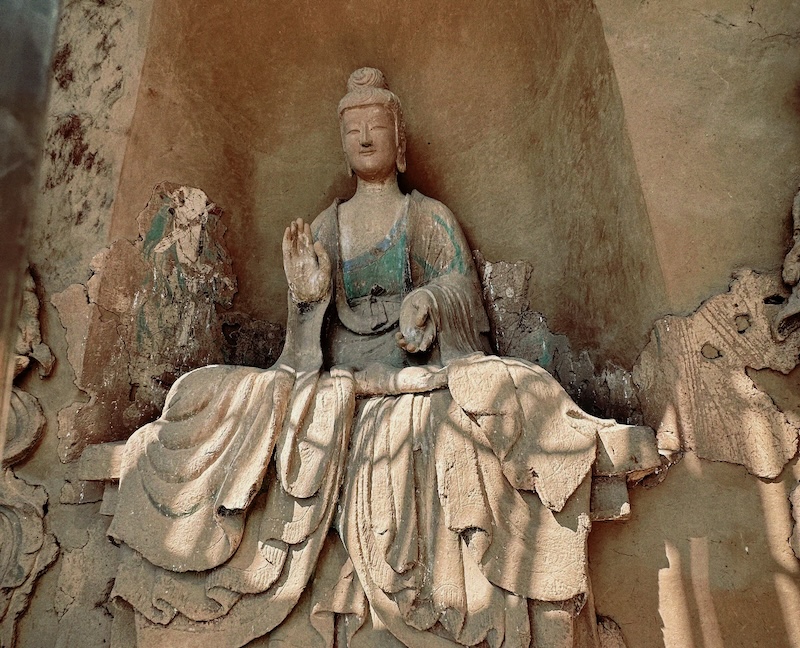
In Maijishan, the divine figures seem almost human, full of sensitivity and emotion.
Yungang Grottoes (Datong): China's most impressive giant Buddhas
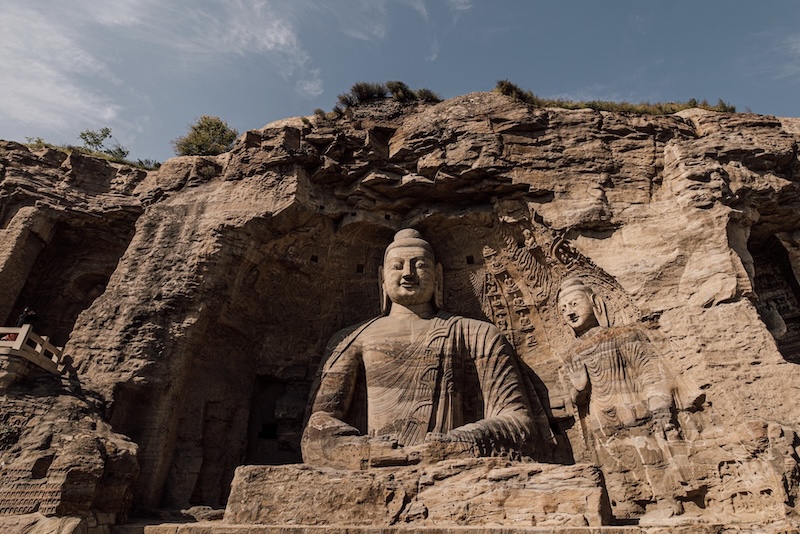
Yungang Grottoes, near the city of Datong, represent one of the first major Buddhist art projects in China.
Its construction began around 460 AD, during the Northern Wei dynasty.
Today the complex includes:
- 45 main caves
- more than 200 secondary caves
- around 59.000 statues
One of the most striking features of Yungang is the presence of gigantic Buddhas carved directly into the rock.
The most famous is the Great Buddha of Cave 20, which stands in the open air with a serene expression that seems to welcome visitors.
The artistic style reflects a strong Gandhara influence, a result of the cultural exchange between China, India and Central Asia through the Silk Road.
Among the most outstanding caves are:
Cave 5 – with a 17-meter Buddha
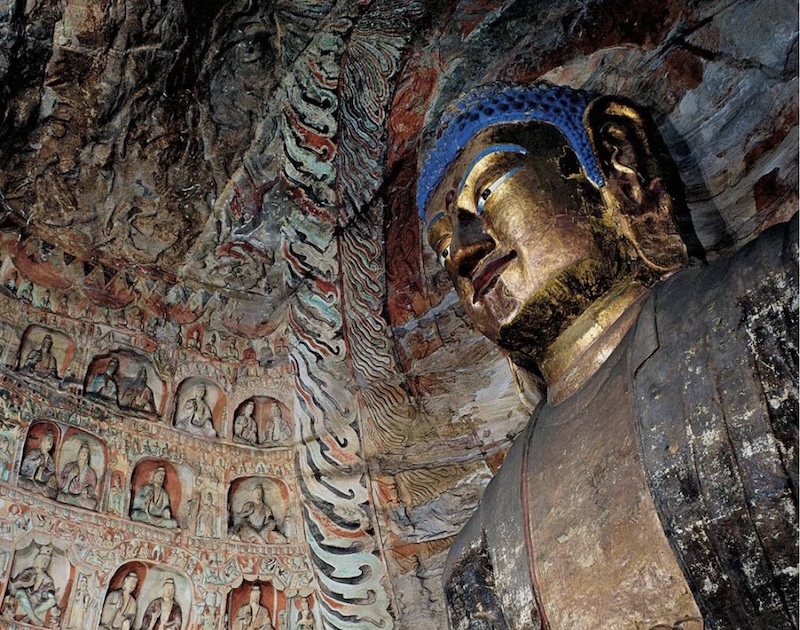
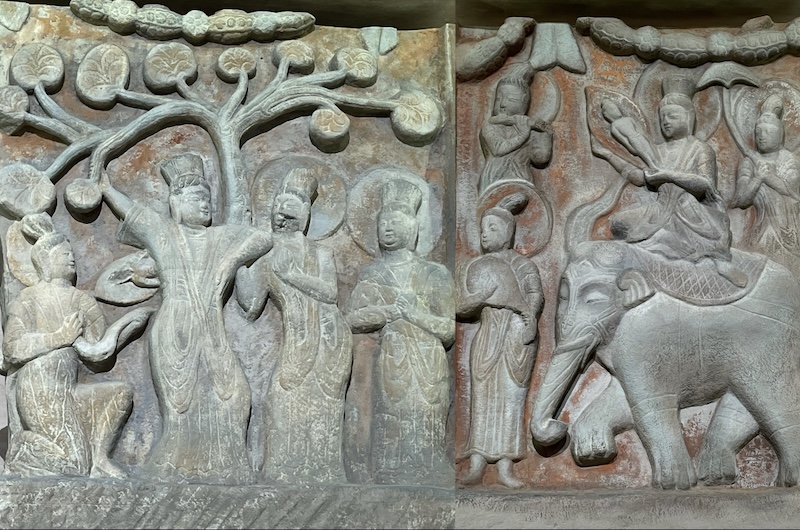
Cave 6 – famous for its narrative reliefs of the life of the Buddha
Cave 20 – Yungang Buddha, a masterpiece of Buddhist art from the Northern Wei dynasty.
Thanks to its spaciousness and good natural lighting, Yungang is one of the easiest and most pleasant places to discover Chinese rock art.
Longmen Grottoes (Luoyang): The Imperial Greatness of Buddhist Art
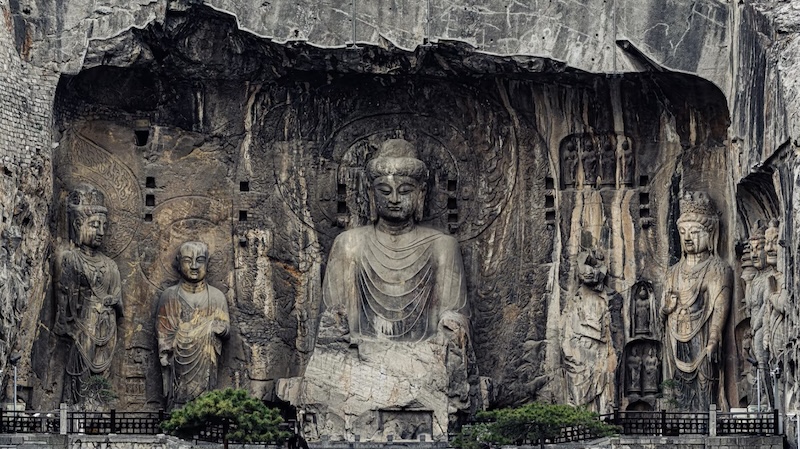
Longmen GrottoesLocated on the banks of the Yi River near Luoyang, they represent the high point of Buddhist art during the Northern Wei and Tang dynasties.
Its construction began in 493 AD, when the imperial capital was moved to Luoyang.
Today the site features:
- 2.345 caves and niches
- more than 110.000 statues
- 2.800 inscriptions and stelae
The most impressive work is the Great Buddha Vairocana of the Fengxian Temple, a monumental sculpture 17 meters high.
His serene face, with a gentle smile, conveys both spiritual compassion and imperial authority. According to tradition, the Buddha's face was inspired by Empress Wu Zetian.
Although many sculptures suffered damage and looting over time, Longmen retains a majestic atmosphere that reflects the artistic splendor of imperial China.
Conclusion
Four grottoes, four ways of understanding Buddhist art
China's four great Buddhist grottoes are not just historical monuments: they are true witnesses to more than a thousand years of spirituality, cultural exchange, and artistic creativity.
Each one offers a different experience:
- Could – the great mural gallery of the desert
- Maijishan – the human emotion of sculpture
- Yungang – the monumental power of the great Buddhas
- Longmen – the majesty of imperial art
Visiting these places is like traversing the history of Asian civilization and discovering how faith and art can transcend the passage of time.
Today, protecting this unique heritage is a shared responsibility. Thanks to its conservation, future generations will also be able to admire these wonders carved into the rock more than a thousand years ago.
