El Jiuzhaigou Valley Jiuzhaigou Valley (literally: Nine Villages Valley), located in Aba Autonomous Prefecture, Sichuan, is a picture of nature of great beauty. It is known for its nine Tibetan villages and is famous throughout the world for its unique high mountain lakes, waterfalls, snow-capped mountains and forests. In 1992, Jiuzhaigou Valley was declared a World Heritage Site by UNESCO and became part of the World Biosphere Reserve Network.
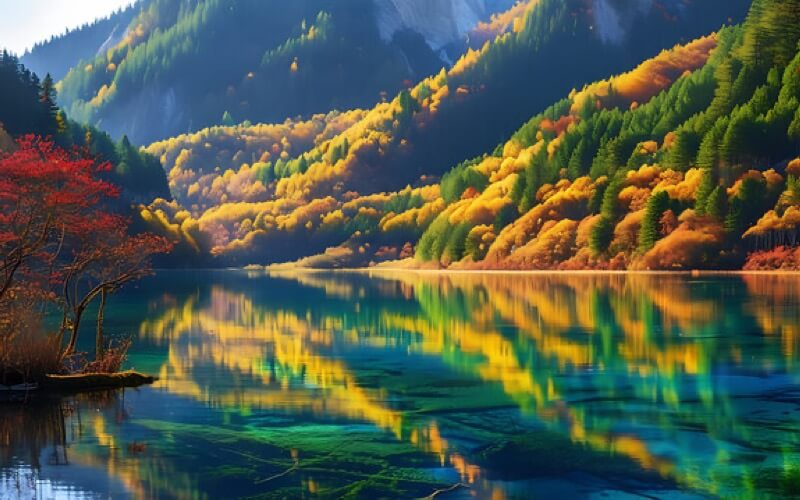
The landscape of Jiuzhaigou Valley is characterized by its "six treasures": green lakes, cascading waterfalls, multi-colored forests, snow-capped mountains, Tibetan charm, and blue ice. The lakes in the area are known for their unique color and crystal-clear water. The lake water reflects different colors depending on the light and season, from emerald green to sapphire blue, from golden orange to scarlet, with endless variations and boundless charm.
Waterfalls are another wonderful natural spectacle in Jiuzhaigou Valley. Nuorilang Falls is the widest calcified waterfall in China and its flow is majestic and spectacular. Zhenzhutan Falls, known for its unique calcified surface and countless waterfalls, is famous for its splendour like shining pearls under the sunlight.
Jiuzhaigou Valley has a high forest coverage rate, and every autumn, the multi-colored forests are transformed into an oil painting full of life and color. In winter, the Valley becomes a fairy world of ice and snow sculptures, with blue ice and towering snow-capped mountains.
In addition to the natural scenery, Jiuzhaigou Valley also has a rich Tibetan culture. Here you can experience traditional Tibetan life, appreciate the unique Tibetan dance and costumes, and feel the strong ethnic charm.
Introduction of tourist sites in Jiuzhaigou Valley
The attractions of Jiuzhaigou Valley are distributed in a “Y” shape through the three main valleys: Rize Valley, Zechawa Valley and Shuzheng Valley.
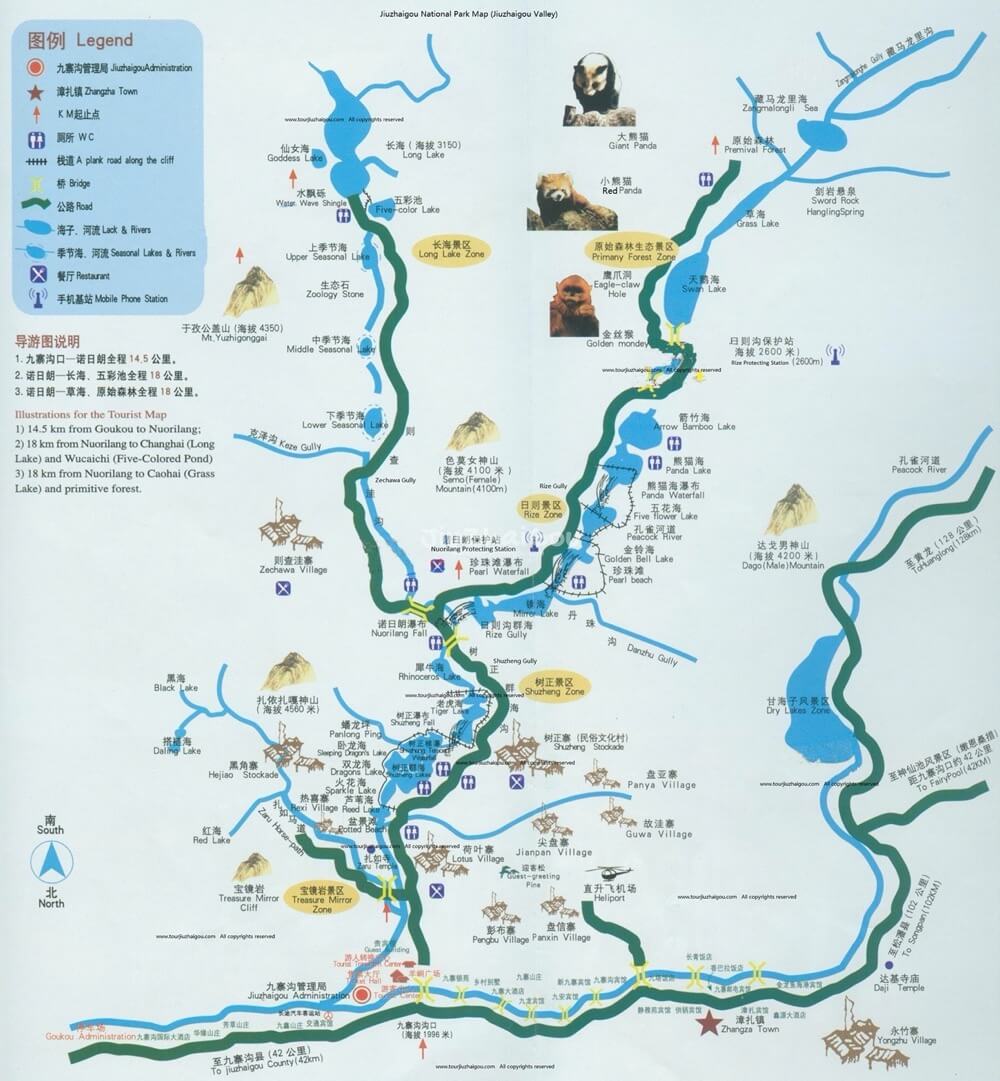
Rize Valley: The right side of the “Y” shape
Rize Valley is known for its Nuorilang Waterfalls, Pearl Beach and Five Flower Lake. Five Flower Lake is famous for its multi-colored waters and rich underwater ecology. At Five Flower Lake, I marveled at the variation in water colors, that interplay of blue-green hues, as if I was in a mysterious underwater world.
Primeval Forest
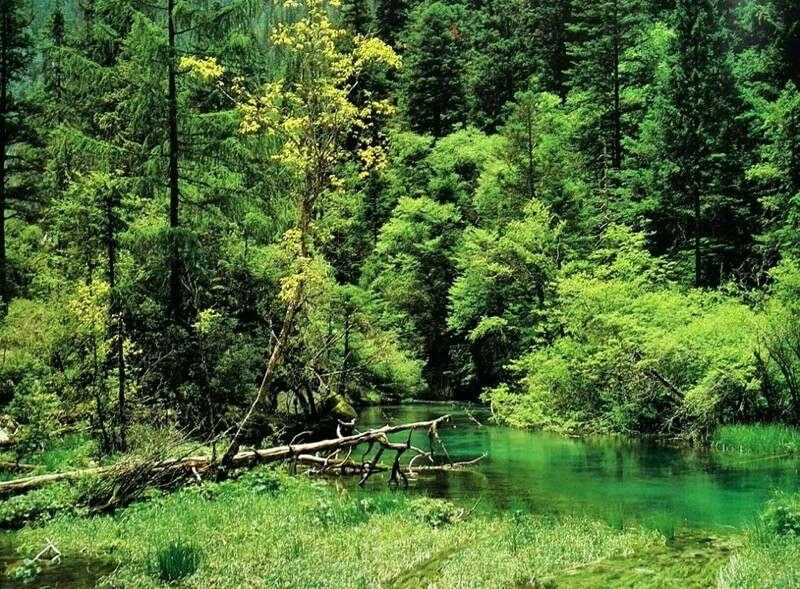
Jiuzhaigou Primeval Forest is a wonder of untouched nature, located at the end of the Rize Valley line. Its elevation reaches 3060 meters and its forest area is 540 hectares. This old forest is full of tall trees and dense bushes, a paradise for fauna and flora. Walking through the forest, you can feel the freshness and tranquility of the air, as if entering a parallel world far away from the hustle and bustle.
Bamboo Lake
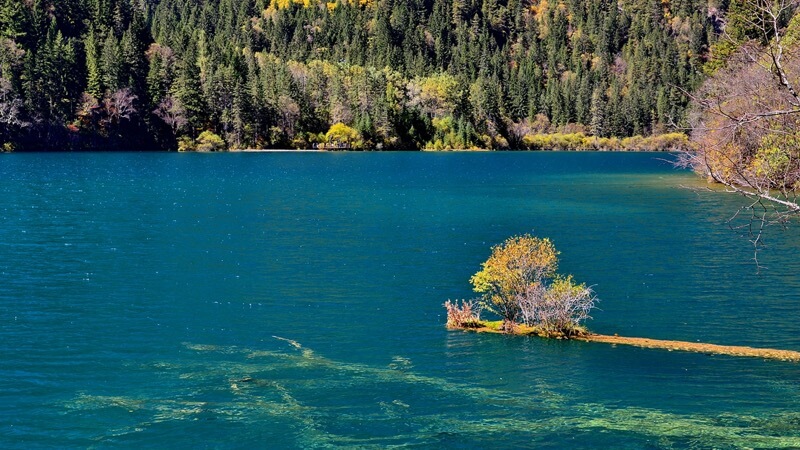
Bamboo Lake, located at the top of Rize Valley in Jiuzhaigou, has an elevation of 2618 meters and covers approximately 170.000 square meters. Surrounding the lake, there is dense, green bamboo that gives the place its name. This bamboo not only adds a touch of greenery to the scenery, but is also the favorite food of the giant panda. The color of the water in Bamboo Lake is a charming turquoise blue, and the lake surface is calm like a mirror, allowing one to clearly see the contours of mountains and bamboos reflected in the water. The scenery here is quiet and mysterious, encouraging visitors to explore further.
Panda Lake
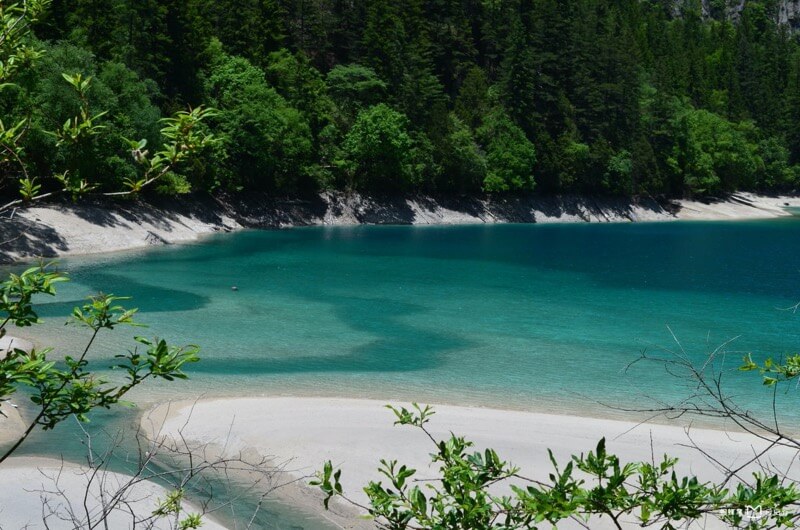
Panda Lake, a neighboring lake to Bamboo Lake, is at an elevation of 2587 meters, has a depth of 14 meters, and covers 90.000 square meters. It is said that the giant pandas of Jiuzhaigou are often found here, thus getting its name. The water of Panda Lake is so clear that you can see the bottom of the lake, with rocks and avocado trees underwater. The waterfalls here are also the highest waterfalls in Jiuzhaigou, with water flowing from a great height and forming an impressive spectacle. Panda Lake is not only a good place to appreciate natural sights, but also an important area to understand and protect giant pandas.
Lake of the Five Flowers
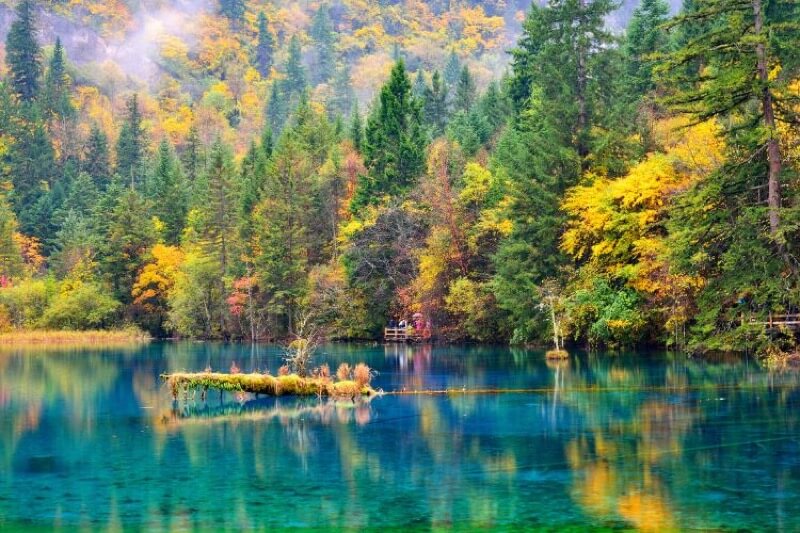
Five Flower Lake is hailed as “a unique wonder of Jiuzhaigou Valley,” with an altitude of 2472 meters, a depth of 5 meters, and an area of 90000 square meters. The lake water displays a wide range of colors due to calcite sedimentation at the bottom, vibrant algae, and differences in the distribution of submerged plants. During autumn, the colorful trees around the lake are reflected in the water, combining with the colors of the lake bottom to create a colorful world full of magic.
Nuorilang Waterfalls
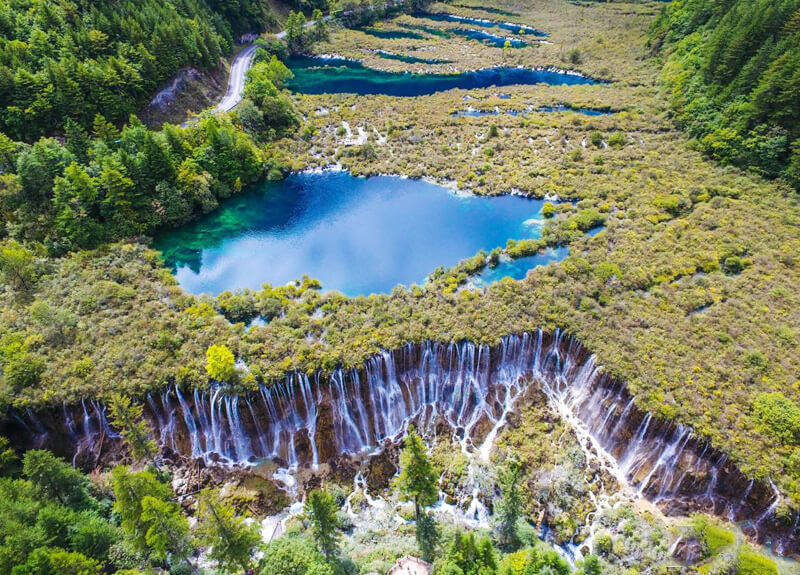
Nuorilang Falls is the widest waterfall in China in terms of calcification, with an altitude of 2343 meters, a height of 24.5 meters and a width of 320 meters. Located in the center of Jiuzhaigou Valley, Nuorilang Falls is impressive and resounding. Water flows from the Nuorilang Lake Group and spills over the edge of the waterfall like several white threads, making it one of the iconic attractions of Jiuzhaigou Valley.
Pearl Beach
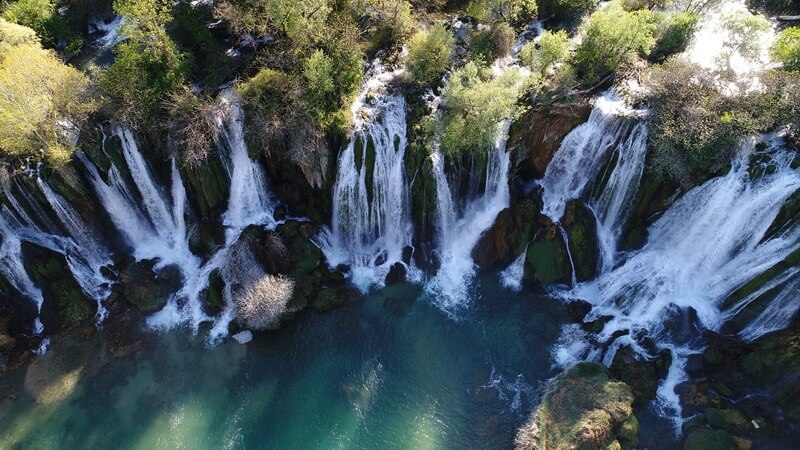
Pearl Beach is located at an altitude of 2433 metres, is approximately 160 metres wide and covers an area of 95000 square metres. It is a large fan-shaped calcification field. The fast-flowing water breaks on the sloping surface of the brown calcification beach and forms countless water droplets which, in the sunlight, shine like pearls, from which it gets its name.
Zechawa Valley: The left side of the “Y” shape
Long Lake and Five-Colored Pond in Zechawa Valley are the highlights. Long Lake is the longest lake in Jiuzhaigou Valley, and Five-Colored Pond is known for its changing colors. At Long Lake, I experienced an unforgettable sunset, with the golden sun spilling over the lake, which fills the heart with tranquility.
Long Lake
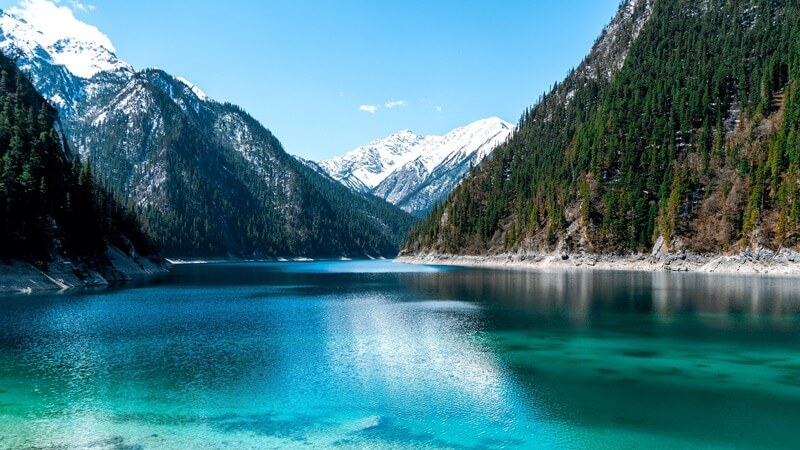
Long Lake is the highest and largest lake in Jiuzhaigou Valley, with an altitude of 3101 meters, about 4350 meters long, 300 meters wide and 90 meters deep. It is a glacier lock lake, with the deepest water, the largest area and the largest capacity. The mountains near Long Lake are covered with snow all year round, and the area is surrounded by green jade forest.
Five Color Pond
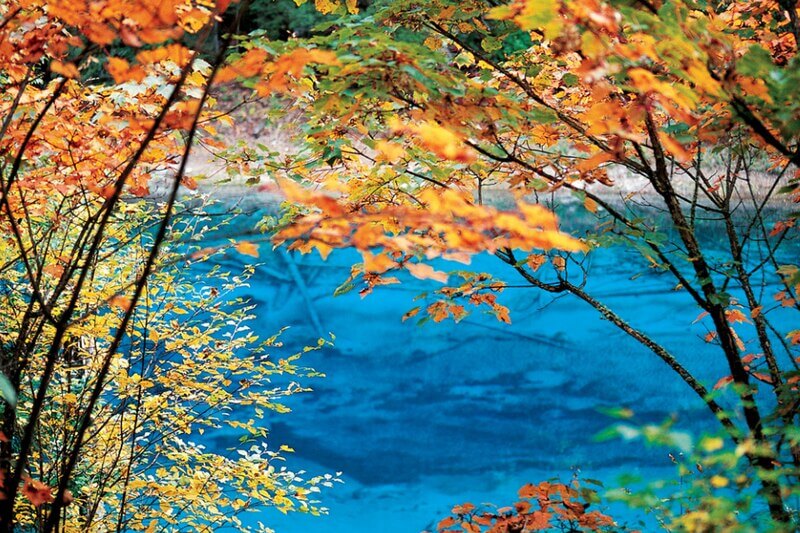
Five-Color Pond is located in Zezawa Valley, at an altitude of 3010 meters, approximately 100 meters long, 60 meters wide, and 6.6 meters deep. It is the smallest and most striking lake in Jiuzhaigou Valley, known as "the eye of Jiuzhaigou." The lake's water comes from groundwater, and the lake surface does not freeze even in winter. Due to the action of sunlight, algae, and calcification, the lake's water is multi-colored.
Shuzheng Valley: The lower part of the “Y” shape
Shuzheng Valley is the heart of Jiuzhaigou Valley and includes attractions such as Penjing Beach, Shuzheng Lake Group and Shuzheng Waterfall. The lakes and waterfalls here form the iconic landscape of Jiuzhaigou Valley. I remember being fascinated by the poetic and pictorial reflections in Shuzheng Lake Group, as if time had stopped at that moment.
Rhino Lake
Rhinoceros Lake, according to legend, is named after an old Tibetan lama who rode a rhinoceros into the sea. It is a natural lake about 2.2 kilometers long and 17 meters deep. It is located on the line of Shuzheng Valley at an altitude of 2315 meters and is one of the most changing seas in Jiuzhaigou. The surface of Rhinoceros Lake is wide, with a northern end filled with arundo shoots and a southern outlet that has both forests and silver waterfalls, and in the middle is the part of the blue lake that intoxicates. The scenery of this place makes visitors fascinated.
Lake Tigre
Tiger Lake is located above the Shuzheng Falls at an altitude of 2298 meters, and is known for its depth and tranquility. In silence, it is permeated with violence, and in peace, it hides pride. Every autumn season, the trees on the edge of the lake are full of color, and the multi-colored trees are reflected in the crystal-clear water of the lake, forming a tiger pattern. The water of Tiger Lake turns blue due to calcification, and the color change is uniform, which is very beautiful.
Shuzheng Falls
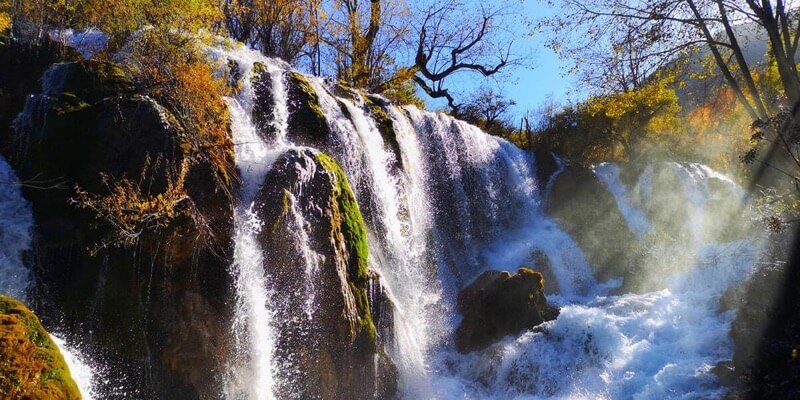
Shuzheng Waterfalls is 2295 meters high, 11 meters high and 62 meters wide. The waterfalls have a forward convex arc shape and the water falls in several levels. It is formed by many waterfalls following each other, and the bushes on the edge of the stream, proudly located in the rapid water, have been subjected to the impact of water for years, with an elegant style, forming a special plant group and a rare natural wonder in the world.
Shuzheng Lake Group
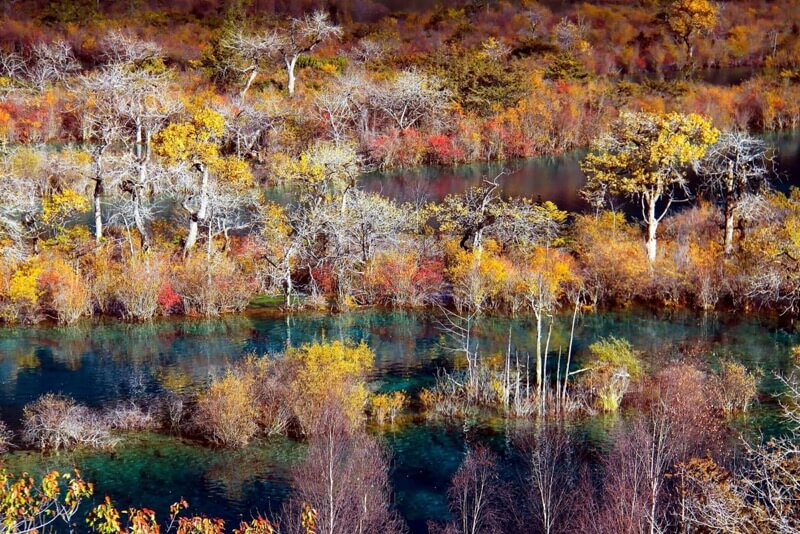
The Shuzheng Lake Group is made up of 19 lakes of varying sizes, ranging from 2187 to 2280 meters above sea level. Here, forests, lakes, and small waterfalls are interconnected, creating a unique scene where "trees grow in the water, water flows in the forest, and people visit in the picture." The Shuzheng Lake Group Valley measures 13.8 kilometers and has more than 40 lakes (seas), accounting for approximately 40% of all lakes in the Jiuzhaigou Valley tourist area.
Junco Lake
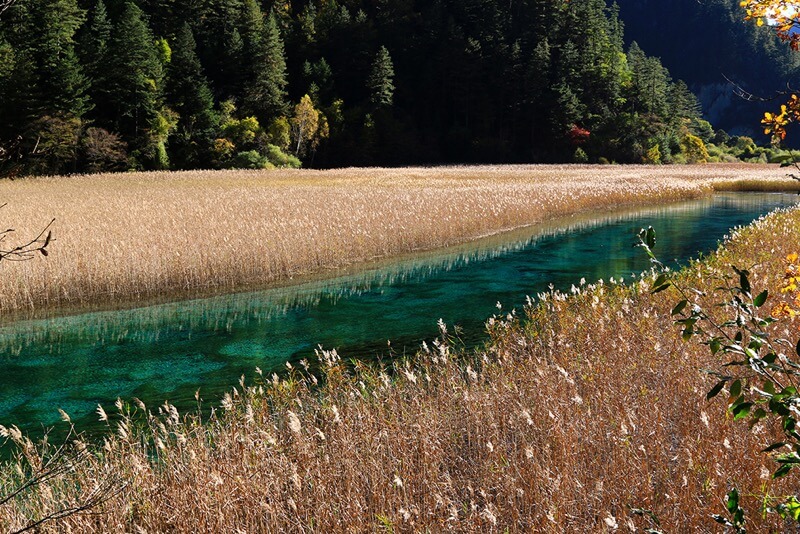
Junco Lake is a semi-wetland lake, at an altitude of 2140 meters, with a length of 2.2 kilometers. Here, the arundines grow densely, waterfowl fly, the rivers are green and clear, and they spread through the air, which is very beautiful. In Junco Lake, the marsh is vast, the arundines are green, and the wind blows gently, and the green waves rise. The sound is soft and melodious, which makes the heart feel relaxed. In the flower season, the arundel is very soft and flirtatious, and it creates a wave of feathers that attracts a group of cormorants and ducks. Then, the entire arundine sea is full of life and collides with the rhythm of poetry, hitting people's hearts.
How to plan a trip to Jiuzhaigou from Chengdu
Day 1: From Chengdu to Jiuzhaigou
From Chengdu, you can choose to fly, take a high-speed train or a bus to Jiuzhaigou.
- The flight lasts approximately 1 hour.
- The high-speed train takes 2 hours from Chengdu East Station to Huanglongjiuzhai Station, and then you need to transfer to a bus to get to Jiuzhaigou which takes about 2 hours.
- The bus can take 6 to 8 hours.
After arriving, you can choose to stay at a hotel near the entrance to the valley.
Day 2: A day in Jiuzhaigou
Spend the whole day exploring Jiuzhaigou, and it is recommended to take the sightseeing bus within the scenic area to visit the main attractions in Shuzheng Valley, Rize Valley and Zezawa Valley.
Day 3: A day in Huanglong
Leave Jiuzhaigou for Huanglong, which is about a 2-3 hour bus ride away. Huanglong is famous for its colorful pools, snow-capped mountains, canyons and forests.
Day 4: Return to Chengdu
You have the option to experience local culture in Jiuzhaigou town before returning to Chengdu.
Tips: How to book Jiuzhaigou tickets
Booking tickets to Jiuzhaigou is an important step for visitors who want to explore this natural wonder. Below is the booking process, specially designed for foreign tourists who are not familiar with Chinese:
Attention: Due to the regulation of Jiuzhaigou Scenic Area Administration, the maximum number of visitors per day is 20,000, and all visitors must book their tickets at least one day in advance on the official Aba Tourism website. Tickets cannot be purchased on-site.
Step 1: Visit the official reservation website
The official website for Jiuzhaigou tickets is www.abatour.com. This is your starting point for booking tickets.
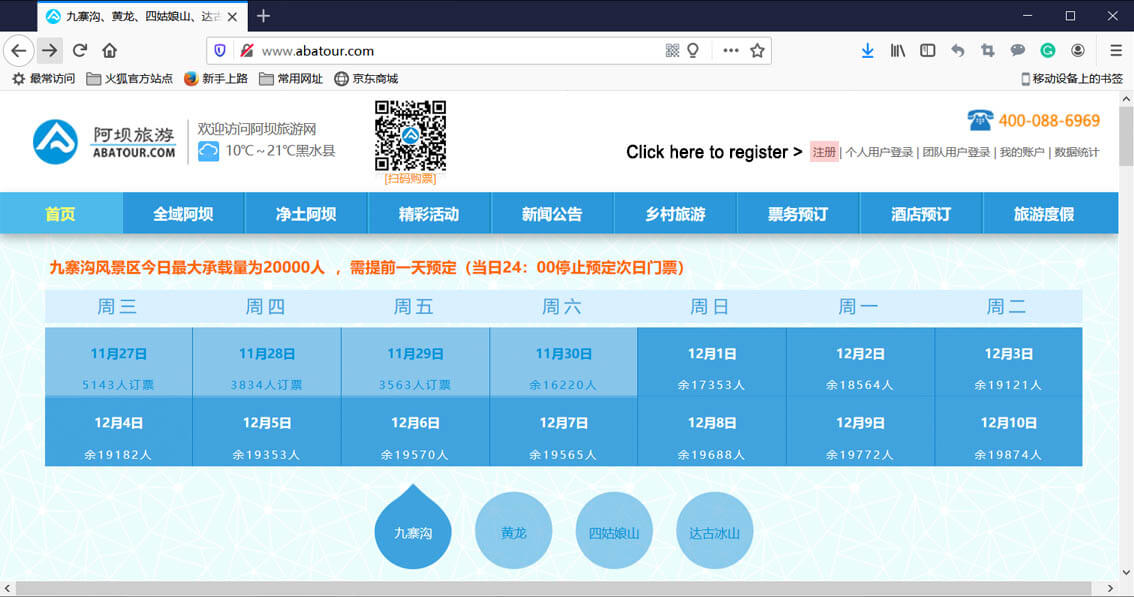
Step 2: Create an account
To book tickets, you need to create an account. Click "Register" on the homepage to access the registration page.

Step 3: Login
Once you've completed registration, click "Sign In" in the top right corner of the homepage to access the login page.
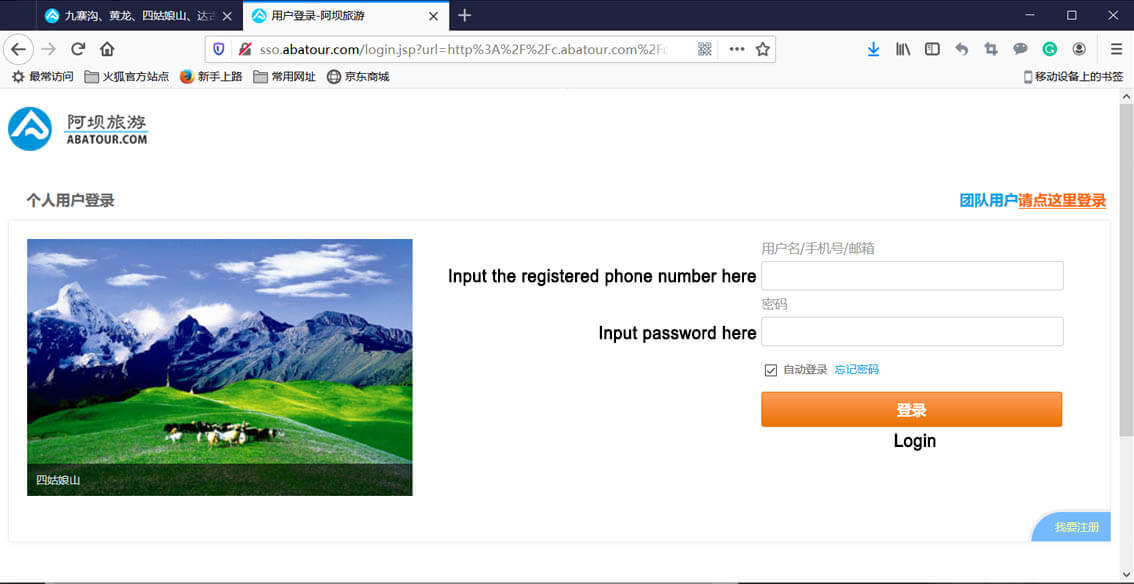
Step 4: Choose your visit date and start booking tickets
After logging in, return to the homepage, select “Jiuzhaigou,” and then choose the date you plan to visit (tickets are on sale 10 days in advance).
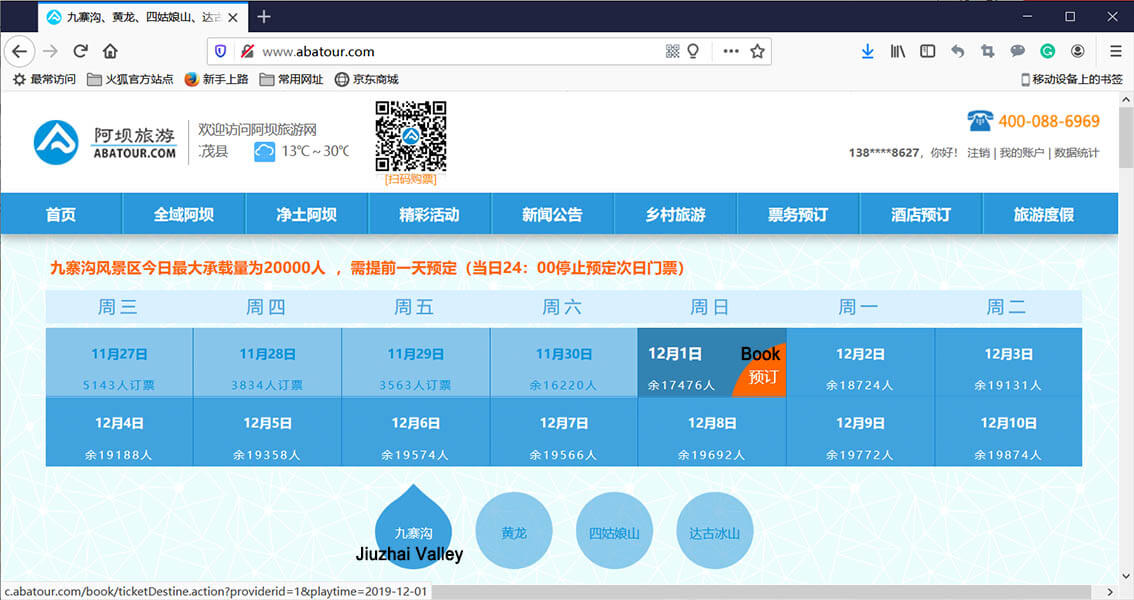
Step 5: Select the ticket type and complete the visitor information
On the ticket and visitor information form, first select your ticket type. Unless you qualify for a discount, you must select "Full Price Ticket," which includes the cost of the bus ride into the park.
For the Foreigner ID field, select "Passport" and fill in the passport number and name. Once completed, click "Confirm" to add the visitor. Repeat these steps until you have added all visitors.
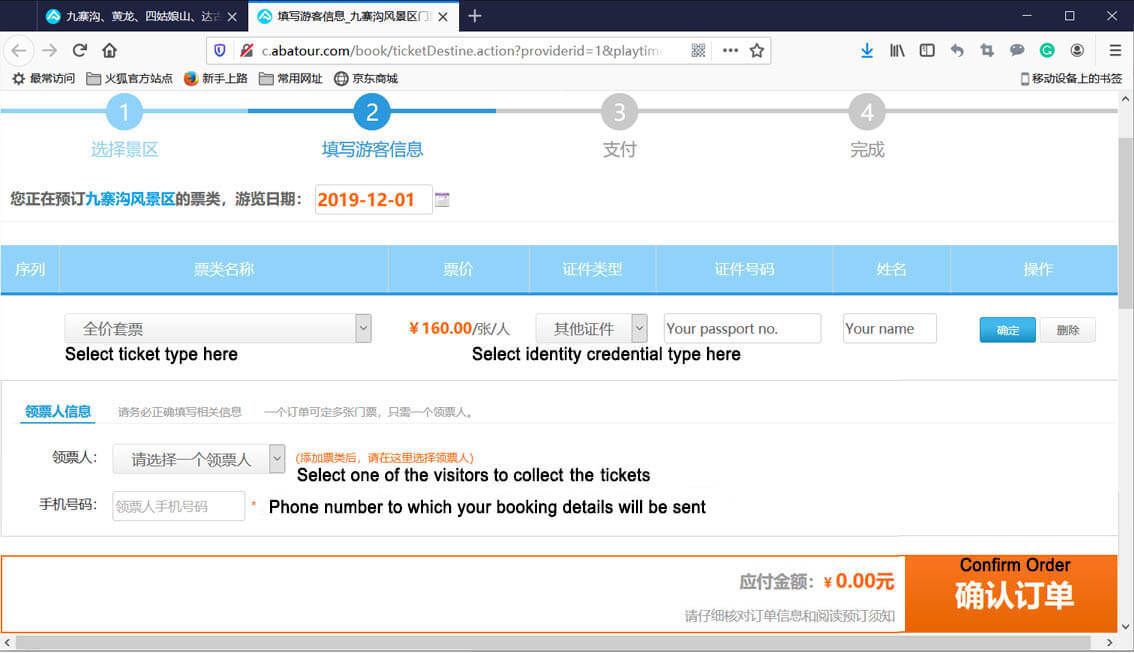
After adding all your visitors, select a person in the "Ticket Holder" field (this is the person who will pick up the tickets at the box office on the day of the visit). The phone number field will be filled in automatically, but you can enter another number if you wish. Once all fields are correctly completed, click "Confirm Order" to proceed with payment.
Step 6: Finalize payment
On the payment page, select “WeChat,” “Alipay,” or a Chinese bank card, then click “Pay Now.” If you choose WeChat or Alipay, you'll see a QR code on the next page.
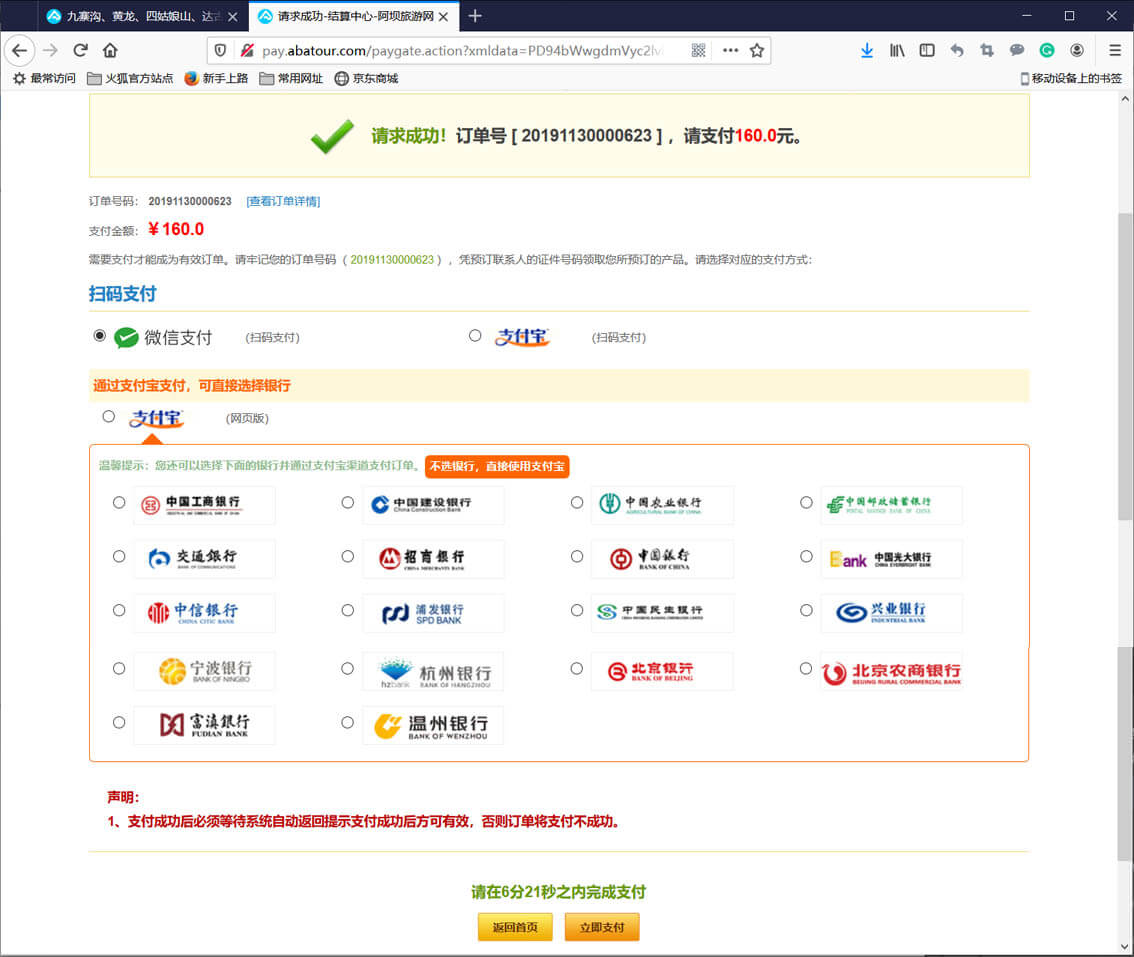
Simply scan the code with the WeChat or Alipay app on your phone to complete the payment. If you choose to use a Chinese bank card, you will be redirected to the online bank's page to complete the payment.
Step 7: Collect tickets and check-in
Visitors must collect their paper tickets at the Jiuzhaigou Park service window with their passport on the reserved date, and then use the paper tickets to check in.
Frequently Asked Questions about Jiuzhaigou Valley
What is the best season to travel to Jiuzhaigou?
The best season to visit Jiuzhaigou depends on your preferences for scenery. Here are the characteristics of each season:
- Spring (March to May): Spring in Jiuzhaigou begins with the thawing of glaciers and the awakening of nature, with the landscape full of life and flowers. At this time, the number of tourists is relatively low, allowing you to enjoy the tranquility of nature.
- Summer (June to August): Summer is a peak tourist season in Jiuzhaigou, with cool weather and a good option to avoid the heat. Water is abundant and waterfalls and lakes are spectacular at this time of year.
- Fall (September to November): Autumn is the most splendid season in Jiuzhaigou, with leaves changing color and vivid color scenery. Especially in mid and late October, it is the best time to appreciate the colorful leaves, and it is considered the best time to visit Jiuzhaigou.
- Winter (December to February): In winter, Jiuzhaigou has fewer visitors. If you like snow scenery and a quiet environment, winter is also a good choice. You can enjoy the frozen waterfalls and lakes under the snow.
In short, if you want to appreciate the Jiuzhaigou with the most colorful scenery, the autumn, especially in mid-late October, is the best time to travel. At this time, most of the leaves have changed color, forming a canvas of vivid colors in nature. However, in the peak season, there are more tourists, so it is recommended to plan and book in advance.
Are there any typical foods you should try while in Jiuzhaigou?
During your trip to Jiuzhaigou, you cannot miss the opportunity to try the unique and characteristic local Tibetan food. Here are some recommendations of foods you should try:
- Yak meat: Yak meat is a local specialty and you can find various types of yak meat cuisine in local restaurants, including dried yak meat, marinated yak meat, and dishes made with fresh yak meat.
- Tibetan barley beerTibetan barley beer is a traditional Tibetan beverage, pale yellow in color and sweet and sour in flavor, known as "Tibetan beer." It's a perfect accompaniment to traditional dishes.
- Yak butter teaYak butter tea is a traditional Tibetan drink, made from yak butter, milk and salt, and has a unique taste. It is a drink not to be missed when experiencing Tibetan culture.
- Barley cake: Barley cake is baked with barley flour and is golden in color and delicious. It is a typical snack of Jiuzhaigou area.
- YogurtJiuzhaigou yogurt is made with fresh milk and has a suitable sweet and sour taste, perfect as an after-meal dessert.
- Tsampa: Tsampa is the traditional Tibetan staple food, similar to Chinese noodles, made from barley, chickpeas, oats, etc. You can experience the traditional way of eating of Tibetans.
Tips for traveling to Jiuzhaigou
Jiuzhaigou is at a high altitude, here are some tips for a good trip to Jiuzhaigou Valley:
- Be careful to avoid altitude reaction.
- Prepare clothing according to the season and weather conditions, especially warm clothing.
- Respect local customs, protect the environment.
- Please check all documents before your trip to ensure a smooth journey.
Jiuzhaigou Valley is beautiful during all four seasons. Spring blooms with a dazzling display of flowers, summer offers a cool retreat, autumn is dressed in vivid colors, and winter presents icefalls and spectacular scenery. Set off immediately to explore this picture of great beauty, it will leave you with an unforgettable impression without fail.


Explore China your way!